
Why Am I Finding Wasps Inside My House in November?
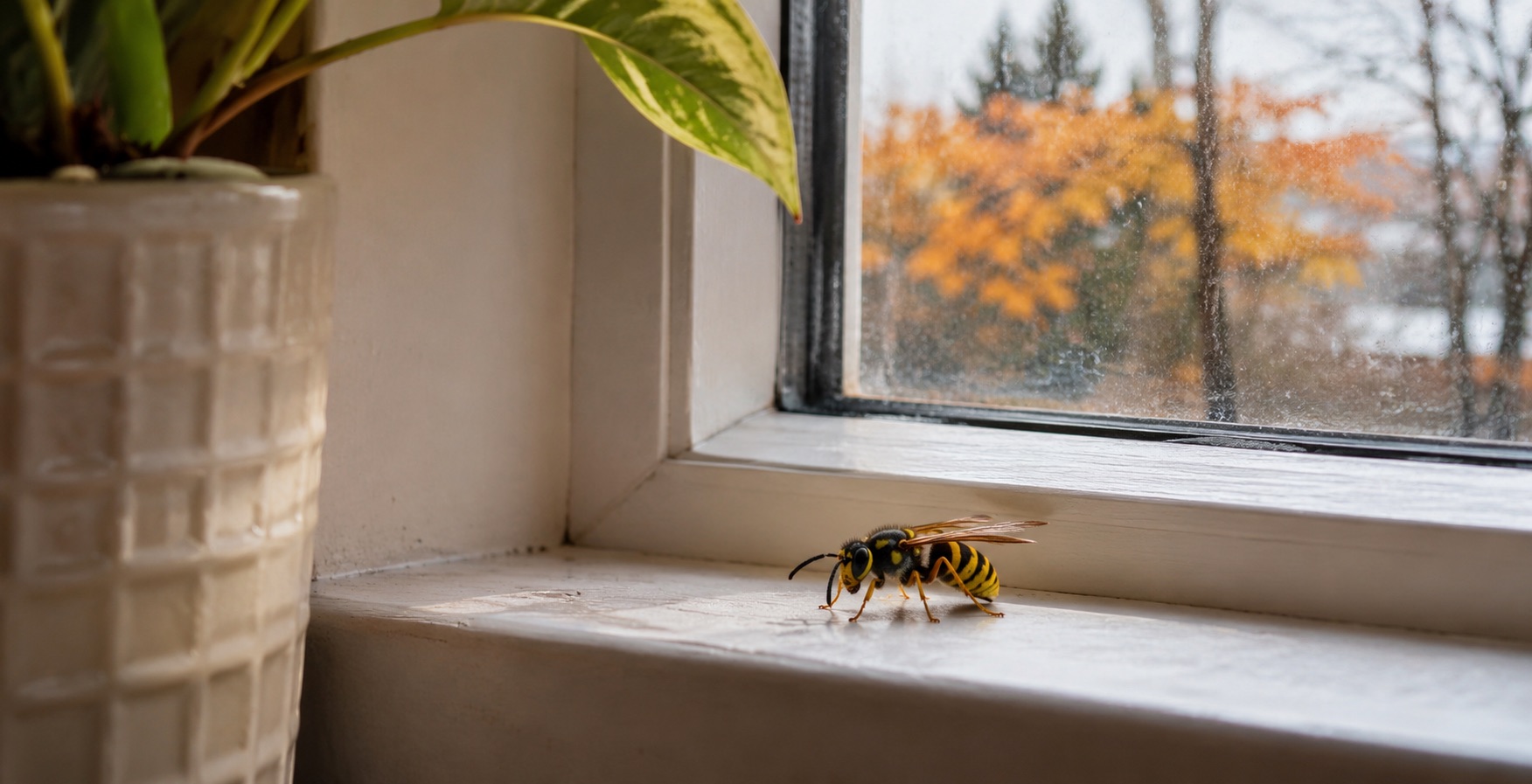
As temperatures drop here in Massachusetts, most homeowners expect their problems with bees, wasps, and hornets to be over for the year. But what happens when you suddenly notice a wasp flying around your living room, crawling near a window, or even coming out of your fireplace in November?
It might seem strange to find wasps inside your home when it’s cold outside, but it’s actually more common than you might think.
At The Bee Hunter, we receive calls from homeowners concerned about unexpected wasp activity during the colder months. The good news? Not every wasp sighting means you have an active infestation or need professional pest control.
Why Are Wasps Coming Inside My House in November?
As fall transitions into winter, wasp colonies throughout Massachusetts begin to die off. Unlike honey bees, which survive the winter together as a colony, most social wasp colonies don’t survive the freezing temperatures.
However, newly mated queen wasps are a different story.
These queens seek protected areas where they can spend the winter sheltered from the elements. Common hiding places include:
- Attics and wall voids
- Chimneys and fireplaces
- Gaps around windows and siding
- Rooflines, soffits, and other sheltered areas
- Cracks and crevices around your home’s exterior
When temperatures temporarily warm up, or when heat from your home reaches these sheltered spaces, overwintering queens can become active and accidentally make their way indoors.
This is why you might suddenly find a wasp flying around your house in November, even after several cold nights.
A Recent Call About Wasps in a Customer’s Fireplace
Recently, I visited a customer’s home after they noticed wasps around their fireplace. Naturally, they were concerned and wanted to know whether professional treatment was necessary.
After evaluating the situation and considering the time of year, I gave them my professional opinion: I wouldn’t recommend spending money on a treatment at this point.
With colder weather settling into Massachusetts, the seasonal wasp colony was nearing the end of its natural life cycle. Based on the circumstances, I felt the remaining activity would likely subside on its own without an expensive treatment.
Could I have performed a service and charged the customer? Absolutely.
But that’s not how I believe a business should operate.
At The Bee Hunter, my goal isn’t to sell you a service you don’t need. It’s to provide honest, knowledgeable advice and help you make the best decision for your home and your wallet.
Sometimes that means removing a dangerous nest. Other times, it means explaining why waiting for nature to take its course is the better option.
Will Wasps Inside My House Die on Their Own?
In many cases, yes, but it depends on the type of wasp and where it’s coming from.
Worker wasps and males generally die as colder weather arrives, and established seasonal colonies typically don’t survive the Massachusetts winter.
Overwintering queens, however, can survive in protected spaces and may occasionally emerge during warmer periods.
If you’re seeing just one or two wasps, it doesn’t necessarily mean there’s an active nest inside your home.
However, if you’re experiencing repeated wasp activity, finding large numbers indoors, or noticing wasps entering through a particular area, it’s worth having the situation evaluated.
Avoid reaching into fireplaces, chimneys, or hidden spaces to investigate a possible nest yourself.
When Should You Call a Professional for Wasps in Winter?
Although many late-season wasp problems resolve naturally, some situations deserve professional attention.
Consider contacting a professional if:
- Wasps are repeatedly appearing inside occupied rooms.
- You suspect an active nest inside a wall, attic, or chimney.
- Someone in your household has a serious allergy to wasp stings.
- You’re unsure whether the insects are wasps, hornets, or another species.
Every situation is different, and the safest recommendation depends on what is actually happening at your property.
Honest Wasp Control Advice From The Bee Hunter
At The Bee Hunter, we specialize in professional bee, wasp, and hornet nest removal and annual preventative treatments throughout our Massachusetts service area.
We believe homeowners deserve straightforward answers, even when those answers mean a service isn’t necessary.
If you’re finding wasps inside your home this November, don’t automatically assume you need an expensive treatment. Understanding seasonal wasp behavior can help you avoid unnecessary worry and expense.
Have questions about wasps in your home? Contact The Bee Hunter. We’ll help you understand what’s happening and whether professional treatment makes sense for your situation.