
Wasp vs Bee: Key Differences, Identification & Removal
Seeing a buzzing insect around your home can immediately raise a few questions. Is it a bee or a wasp? Is there a nest nearby? And, most importantly, should you be concerned?
Although bees and wasps are often confused with one another, there are important differences in their appearance, behavior, nesting habits, and level of aggression. Knowing what you’re dealing with can help you decide what to do next and when it’s time to call a professional.
At The Bee Hunter of Massachusetts, we specialize in the control and removal of stinging insects, including bees, wasps, hornets, and yellow jackets. Here’s how to identify the difference between a wasp and a bee and what you should do if they’ve made themselves at home on your property.
Wasp vs Bee: What’s the Difference?
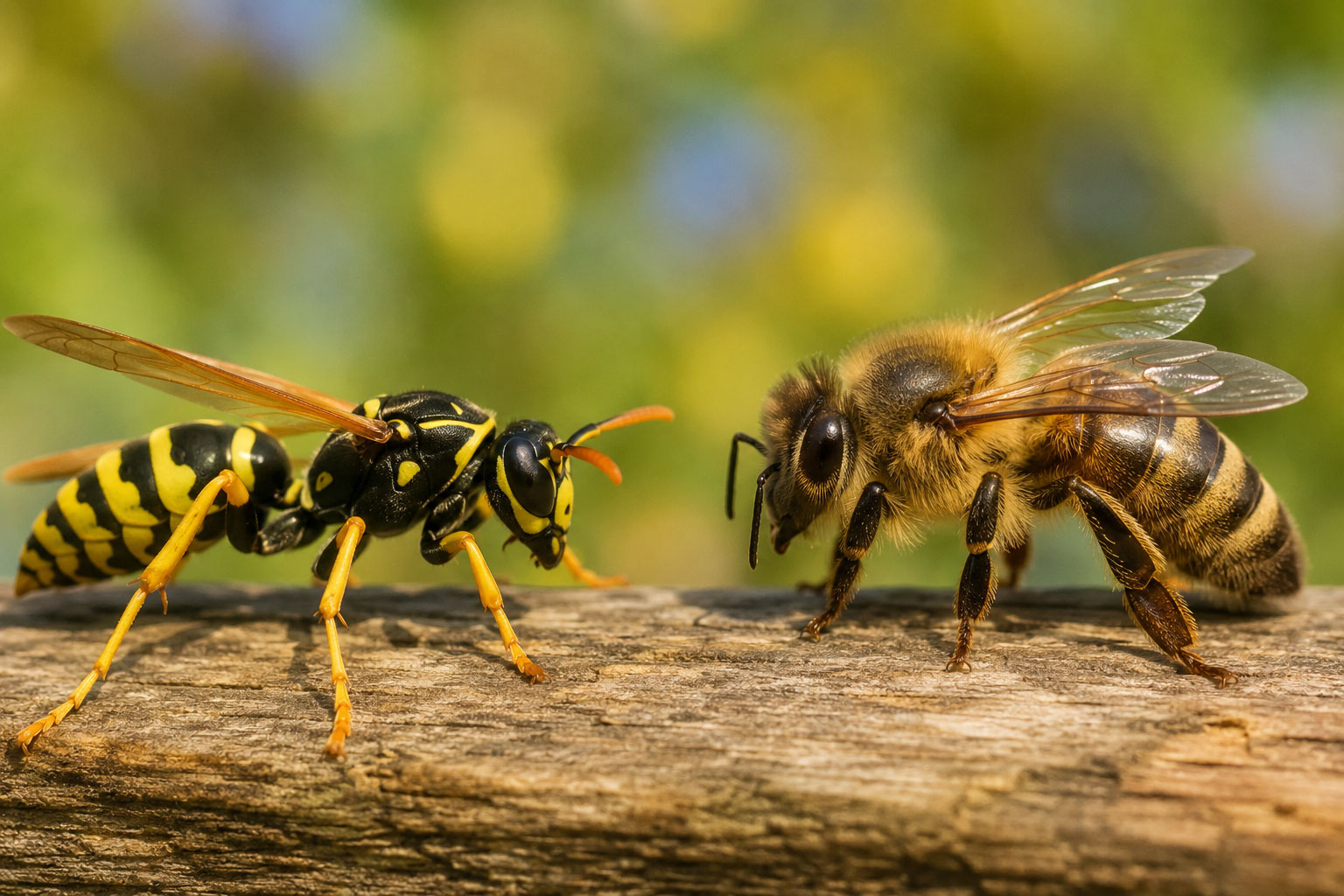
Bees and wasps are both flying, stinging insects, but they aren’t the same. One of the easiest ways to tell them apart is by looking at their bodies.
Bees generally have rounder, fuller bodies with noticeable hair or fuzz. That hair helps them collect and transport pollen as they travel from flower to flower.
Wasps typically have smoother, shinier bodies with a narrower waist between the thorax and abdomen. Their bodies often appear more slender and streamlined than those of bees.
Color alone isn’t always a reliable way to identify a stinging insect. While many people associate bees with yellow and black coloring, different bee and wasp species can have very different markings.
Quick Bee vs Wasp Identification Guide
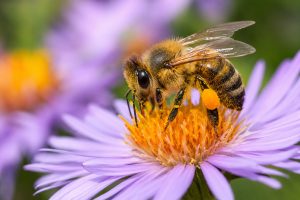 Bees typically have:
- Rounder, fuller bodies
- Hairy or fuzzy appearances
- Less-defined waists
- A strong interest in flowers and pollen
- Nests that vary depending on the species
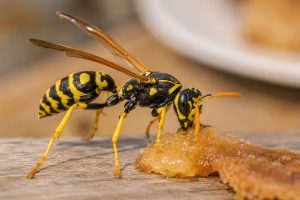 Wasps typically have:
- Slender, smooth bodies
- Very little visible body hair
- Narrow, defined waists
- Long-looking legs
- More noticeable interest in human food, sugary substances, or other insects
- Paper-like nests or nests hidden inside structures or underground, depending on the species
If you can’t safely identify the insect from a distance, don’t get closer just to get a better look. A professional can identify the insect and determine whether there’s an active nest nearby.
Honeybee vs Wasp: What Should You Look For?
Honeybees are one of the bee species Massachusetts homeowners may encounter. They’re generally fuzzy, with stockier bodies and coloring that can range from golden brown to darker brown or black.
Wasps tend to look smoother and more sharply defined. Some species display striking yellow-and-black markings, while others can be reddish, brown, or darker in color.
The insects’ activity can also provide clues.
Honeybees are often seen moving between flowering plants as they collect pollen and nectar. If you see numerous honeybees repeatedly entering and exiting the same opening in a wall, roofline, chimney, or other structure, however, a colony could be established inside.
Wasps are predators and scavengers in addition to feeding on sugary substances. You may notice them around outdoor meals, trash containers, decks, sheds, rooflines, and other locations where they can find food or build nests.
Bee vs Wasp Behavior: Gentle vs. Aggressive
Behavior is another important difference when comparing a wasp vs bee.
Honeybees are generally less aggressive when they’re away from their colony and foraging. They can still sting when they feel threatened, especially when their colony is disturbed, so an active colony around a home shouldn’t be approached or handled without proper knowledge and equipment.
Wasps can be more defensive, particularly around an established nest. Yellow jackets, for example, can become a serious concern when their nesting area is disturbed or when people unknowingly get too close.
Another important difference involves stinging. A honeybee worker generally leaves its barbed stinger behind after stinging a person and dies afterward. Many wasps have smoother stingers and are capable of stinging repeatedly.
That makes disturbing an active wasp nest especially risky.
Where Do Bees and Wasps Build Nests?
Knowing where to look for insect activity can help determine whether you’re dealing with an occasional visitor or an established colony.
Around Massachusetts homes and businesses, stinging insects can become established in or around:
- Walls and ceilings
- Attics and rooflines
- Eaves and overhangs
- Decks and porches
- Sheds and barns
- Trees and shrubs
- Yards and underground spaces
- Gaps, cracks, vents, and other structural openings
Some nests are easy to see. Others may be completely hidden.
For example, you might never see a nest inside a wall. Instead, you may notice insects repeatedly flying in and out through a small opening on the exterior of the building. That repeated traffic is a good indication that something may be established inside.
Bee Nest vs Wasp Nest: What’s the Difference?
The nest itself can sometimes help identify the insect.
Honeybees create wax comb consisting of the familiar hexagonal cells used to store honey and raise young. When honeybees establish themselves inside a structure, that comb may be hidden inside a wall, ceiling, attic, or other cavity.
Many social wasps construct nests from a paper-like material created by chewing wood fibers. Depending on the species, these nests can be exposed or concealed.
Yellow jackets can also establish colonies underground or inside structural voids, making their nests difficult to locate without experience.
The important thing is not to poke, spray, seal, or otherwise disturb an unknown nest to determine what’s inside.
What Should You Do If You Find a Bee or Wasp Nest?
Your first priority should be keeping people and pets away from the area.
Avoid standing directly in the insects’ flight path, hitting the nest, blocking the entrance, or attempting to knock it down. Children and pets should be kept away until the situation has been assessed.
You should also be cautious about relying on do-it-yourself sprays for an established colony.
Treating only the insects you can see may not address a nest hidden behind a wall or inside another inaccessible area. Getting close enough to apply a product can also provoke defensive insects and put you at risk of multiple stings.
Don’t Seal an Active Nest Entrance
Finding the opening that insects are using to enter your house might make sealing it seem like the obvious solution.
It can actually make the situation worse.
If bees or wasps are already established inside a wall, ceiling, attic, or other cavity, sealing their normal entrance may cause surviving insects to search for another way out. Depending on the structure, that could send them farther into the building.
The colony should be properly addressed before entry points are sealed as part of prevention.
When Should You Call for Professional Bee or Wasp Removal?
A single bee visiting flowers in your yard doesn’t necessarily mean you have a problem. Repeated activity in one location is a different story.
Consider calling a professional if:
- Large numbers of bees or wasps are appearing around your property
- Insects repeatedly enter and exit the same hole or structural gap
- You can see an active nest on or near your home
- Bees or wasps are getting inside the house
- The nest is near a doorway, deck, patio, walkway, playground, or other busy area
- The colony appears to be inside a wall, ceiling, attic, or shed
- Wasps or yellow jackets become defensive when you approach an area
- You aren’t sure what type of stinging insect you have
Professional identification matters because the safest and most effective approach can depend on the insect, nest location, and surrounding structure.
Mass Bee and Wasp Control From The Bee Hunter
When bees, wasps, hornets, or yellow jackets establish a nest around your Massachusetts home or business, you don’t have to figure out the problem yourself.
The Bee Hunter of Massachusetts specializes in the control and removal of stinging insects, including bees, wasps, hornets, and yellow jackets. Nests and colonies can develop in walls and ceilings, on decks, around sheds, in yards, and in other areas where they can quickly become a safety concern.
Through a rapid-response removal system, The Bee Hunter can locate and address stinging insects that are threatening your property.
The Bee Hunter is fully insured, certified, and experienced in bee and wasp control, and the work is guaranteed in writing. If they come back, so will I!
The Bee Hunter serves communities throughout Massachusetts, including Metrowest, the Blackstone Valley, North Worcester County, Middlesex County, Norfolk County, and surrounding areas.
Need Bee or Wasp Removal in Massachusetts?
If you’re looking at an active nest or seeing stinging insects repeatedly entering your home, don’t risk getting close enough to identify or remove them yourself.
Call or text The Bee Hunter at 508-471-6437 for a free estimate. With 24/7 rapid response and professional bee and wasp control, The Bee Hunter can identify the problem, determine where the insects are nesting, and provide the appropriate treatment.
When bees or wasps take over part of your property, call the Massachusetts specialist who deals exclusively with stinging insects.
If they come back, so will I!