
The Benefits of Treating Your Hornet Problem Immediately
Don’t Wait Until Someone Gets Stung
Finding a hornet nest on your property can be alarming, and for good reason. While many insects play an important role in our environment, hornets are among the most aggressive stinging pests homeowners encounter. A hornet nest hanging from a tree branch, attached to your home’s eaves, or hidden beneath a deck can quickly become a serious safety hazard for your family, pets, and visitors.
At The Bee Hunter, we regularly help Massachusetts homeowners safely remove dangerous hornet nests before they become a larger problem. The longer a hornet colony remains undisturbed, the larger and more dangerous it can become.
If you’ve discovered a hornet nest on your property, immediate professional treatment is often the safest solution.
Not All Bees Are Bad
Before discussing hornets specifically, it’s important to understand that not all stinging insects are harmful.
Honey bees and many native bee species are critical pollinators that help support local ecosystems, gardens, farms, and food production. These beneficial insects are generally non-aggressive and only sting when they feel threatened.
Hornets, however, are a different story.
Despite often being grouped together with bees, hornets are actually wasps belonging to the genus Vespa. Their behavior, nesting habits, and defensive responses make them significantly more dangerous around homes and high-traffic areas.
This is why proper identification is so important. The Bee Hunter specializes in identifying stinging insects and recommending the safest course of action for your specific situation.
Why Hornets Are So Dangerous
Hornets are highly defensive insects that aggressively protect their nests.
Unlike honey bees, hornets do not die after stinging. This means a single hornet can sting a person multiple times, injecting venom with each attack. Their stingers are powerful enough to penetrate thick clothing, making protective layers less effective than many people assume.
Even more concerning, hornets release an alarm pheromone when they perceive a threat. This chemical signal alerts nearby colony members that the nest is under attack.
The result?
A single sting can quickly escalate into a swarm attack involving dozens or even hundreds of hornets.
For homeowners attempting DIY nest removal, this can create an extremely dangerous situation within seconds.
The Risk of Severe Allergic Reactions
For individuals with insect sting allergies, a single hornet sting can be life-threatening.
Hornet venom can trigger anaphylaxis, a severe allergic reaction that requires immediate medical attention. Symptoms may include:
- Difficulty breathing
- Swelling of the throat or tongue
- Rapid heartbeat
- Dizziness or fainting
- Severe skin reactions
- Loss of consciousness
Without prompt treatment, anaphylactic shock can become fatal.
Even individuals without known allergies can experience serious complications when subjected to multiple hornet stings.
This is one of the primary reasons why hornet nests should never be ignored.
Bald-Faced Hornets: Massachusetts’ Most Aggressive Stinging Pest
One of the most common and dangerous hornets found in Massachusetts is the bald-faced hornet (Dolichovespula maculata), often referred to as a white-faced hornet because of the distinctive white markings on its head.
These insects are well known for their aggressive nest defense and should be avoided whenever possible.
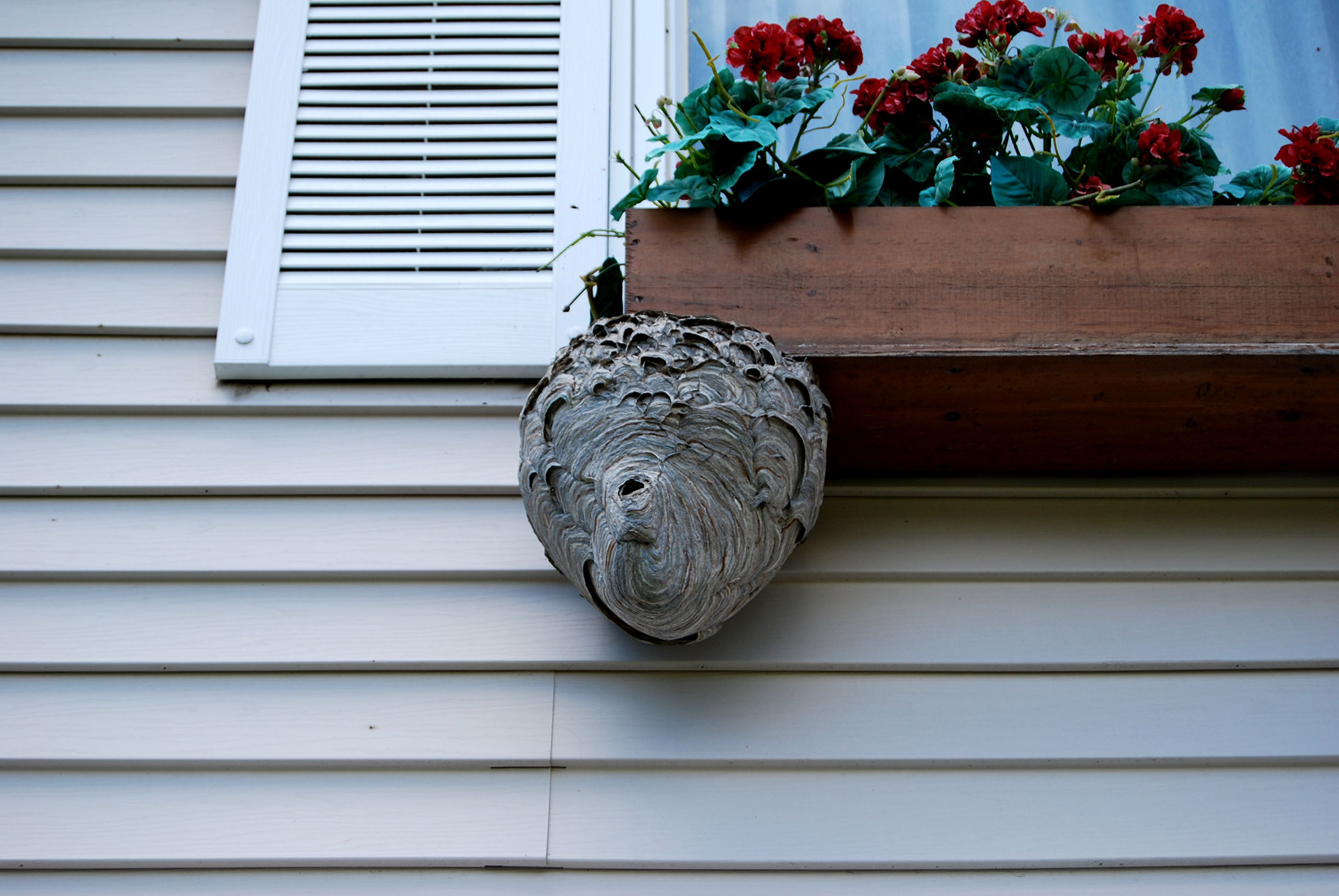
Bald-faced hornets typically build large gray, paper-like nests that resemble footballs. These nests are constructed from wood fibers that the hornets chew and mix with saliva to create a durable paper material.
You may find these nests:
- Hanging from tree branches
- Attached to eaves and rooflines
- Under decks
- Near fascia boards
- On sheds and outbuildings
Unlike yellow jackets, bald-faced hornets rarely enter homes through construction gaps. However, their proximity to outdoor living areas can still pose a significant threat.
Why Waiting Makes the Problem Worse
One of the biggest mistakes homeowners make is assuming a hornet nest will simply go away on its own.
In reality, hornet colonies continue growing throughout the season. What starts as a small nest in spring can become a large colony containing hundreds of workers by late summer.
Delaying treatment can lead to:
- Larger Colonies: More hornets means greater risk for anyone who accidentally disturbs the nest.
- Increased Aggression: As colonies mature, hornets become more protective of their queens and developing larvae.
- Greater Risk to Children and Pets: Children playing outdoors and pets exploring the yard can unknowingly trigger an attack.
- More Difficult Removal: Larger nests require more extensive treatment and present greater risks during removal.
- Reduced Outdoor Enjoyment: Many homeowners avoid using decks, patios, pools, gardens, and outdoor entertaining spaces once hornets establish a nearby nest.
Hornets Can Harm Beneficial Pollinators
While hornets consume nectar and sugary foods, they are also predators.
Hornets hunt a variety of insects including:
- Grasshoppers
- Locusts
- Caterpillars
- Flies
- Honey bees
They often capture prey, chew it into a protein-rich pulp, and feed it to developing larvae.
Although this behavior is natural, large hornet populations can place additional pressure on local pollinator populations, including honey bees that play a vital role in our ecosystem.
Why DIY Hornet Removal Is Risky
Many homeowners search online for DIY hornet nest removal techniques. Unfortunately, these methods often lead to injuries and emergency room visits.
Common mistakes include:
- Spraying nests during daylight hours
- Hitting or disturbing the nest
- Using ineffective over-the-counter products
- Attempting removal without proper protective equipment
- Climbing ladders near active nests
Remember, hornets are capable of coordinating attacks through alarm pheromones. Once agitated, they may pursue perceived threats over surprisingly long distances.
Professional treatment minimizes these risks and ensures the nest is handled safely.
The Benefits of Professional Hornet Removal
When you hire a professional hornet removal specialist, you gain several important advantages:
- Accurate Identification: Not every paper nest belongs to hornets. Proper identification ensures the correct treatment plan.
- Safe Treatment Methods: Professionals use proven techniques designed to eliminate nests while minimizing risk to people and property.
- Reduced Sting Risk: Protective equipment and experience dramatically lower the chance of injury.
- Complete Nest Elimination: Treating the entire colony helps prevent recurring problems.
Contact The Bee Hunter for Safe Hornet Removal
fI you’ve discovered a hornet nest on your property, don’t wait for someone to get stung.
Hornets can be aggressive, capable of stinging multiple times, and may mobilize an entire colony when threatened. For families with children, pets, elderly relatives, or individuals with allergies, delaying treatment can create unnecessary risks.
The Bee Hunter specializes in the safe identification, treatment, and removal of hornet nests throughout Massachusetts. Our experienced team can assess the situation, eliminate the threat, and help restore your peace of mind.
Protect Your Family Today
If you suspect a hornet nest on your property, contact The Bee Hunter today. Let a trained professional handle the danger so you can stay safe and enjoy your home without fear of painful or potentially life-threatening hornet attacks